Skip to content

New guideModernizing a legacy system without stopping the business

04 — SaaS Product Development

SaaS products engineered for the customers you'll have next year.

A SaaS product carries decisions that are expensive to change later: how tenants are isolated, how plans and billing work, how customers onboard, how data is backed up and exported. We help founders and product teams make those decisions deliberately, then build a first release that can grow without a rewrite.

Capabilities

What this service covers.

  1. 01

    Tenancy architecture

    Shared, schema-per-tenant or database-per-tenant models chosen for your compliance and scale needs.

  2. 02

    Subscription billing

    Plans, trials, upgrades, invoices and webhooks with established billing providers.

  3. 03

    Identity and teams

    Sign-up, SSO options, team invitations and role management per tenant.

  4. 04

    Product analytics

    Event tracking to understand activation and feature usage.

  5. 05

    Internal admin

    Support and operations tools for your own team to manage tenants.

  6. 06

    Public API

    Documented APIs and webhooks for customers who integrate with you.

What We Build

SaaS Development solutions we deliver.

Multi-tenant products with billing, onboarding and room to grow.

Example SaaS Development interface built by Eryon
  • 01

    SaaS MVP development

    A focused first release with real tenancy, sign-up and billing — built to grow, not to throw away.

  • 02

    Multi-tenant B2B platforms

    Organisations, teams, roles and permissions for business customers.

  • 03

    Subscription and billing

    Plans, trials, upgrades, invoices and payment gateway integration.

  • 04

    White-label platforms

    One product delivered under each customer's own brand and domain.

  • 05

    Customer onboarding flows

    Guided setup that gets new accounts to their first result quickly.

  • 06

    Admin and support consoles

    Internal tools to manage tenants, plans, usage and support cases.

  • 07

    Public APIs and webhooks

    Documented interfaces for customers who integrate with your product.

  • 08

    SaaS re-architecture

    Refactoring a single-client system into a scalable multi-tenant product.

Use Cases

When clients bring us in.

First release of a new product

A focused version that paying customers can use, built on foundations that scale.

Turning a single-client system into SaaS

Adding tenancy, billing and onboarding to software built for one organisation.

Scaling an early product

Refactoring the parts that slow down as customers grow.

Adding self-serve

Sign-up, payment and onboarding without a sales call.

Where It's Used

Problems we solve, sector by sector.

  • HR and recruitment

    The problem
    Hiring and staff data are managed in spreadsheets across clients.
    What we build
    Multi-tenant HR and recruitment SaaS with role-based access per organisation.
  • Education

    The problem
    Schools want modern software without running servers.
    What we build
    Hosted school management SaaS with campus-level data separation.
  • Fitness

    The problem
    Gyms need memberships and billing without IT staff.
    What we build
    Subscription-based gym management SaaS with recurring payments.
  • Real estate

    The problem
    Agencies pay for tools that don't fit how they sell property.
    What we build
    Vertical CRM SaaS built around listings, leads and site visits.
  • Construction

    The problem
    Contractors juggle attendance and billing across many sites.
    What we build
    Project and workforce SaaS with per-company data isolation.
  • Professional services

    The problem
    Firms share documents and status by email.
    What we build
    Client portal SaaS with workspaces per client and secure file exchange.

Recognise your situation here?

Talk to an engineer

How We Deliver

Delivery you can plan around.

Scope to the first paying customer

We cut the first release to what a customer will pay for, and plan the rest.

Architecture review

Tenancy, billing and data decisions written down with their trade-offs.

Continuous delivery

Frequent, low-risk releases through automated pipelines.

Product partnership

Ongoing work as a product engineering team after launch, if you want it.

Deliverables

  • Product scope and release plan
  • Multi-tenant application and API
  • Billing and subscription integration
  • Internal admin console
  • Infrastructure as code and CI/CD

Technology Stack

Tools we use for this work.

  • Next.js
  • TypeScript
  • Node.js
  • Spring Boot
  • PostgreSQL
  • Supabase
  • Redis
  • Stripe
  • Razorpay
  • Docker
  • AWS
  • Vercel

Security & Scalability

  • Tenant isolation

    Tenant context enforced at the data layer with row-level security or separate schemas.

  • Noisy-neighbour protection

    Rate limits and background queues so one tenant cannot slow down others.

  • Backups and exports

    Automated backups and customer data export as a first-class feature.

  • Auditability

    Audit logs for administrative and security-relevant actions.

Process

From first workshop to production.

  1. 01 · Discover

    Workshops with the people who run the process today. We map how work actually moves, where it stalls and what the system must never get wrong.

  2. 02 · Define

    A written scope: users and roles, core workflows, integrations, non-functional requirements and a release plan you can hold us to.

  3. 03 · Architect

    Data model, service boundaries, hosting, security model and the trade-offs behind each choice — reviewed with your team before code starts.

  4. 04 · Build

    Short sprints with a working demo every week. Code review on every change, automated tests on the paths that carry money or data.

  5. 05 · Validate

    Functional QA, role-by-role acceptance, performance checks and a security pass before anything reaches production users.

  6. 06 · Scale

    Staged rollout, monitoring and a support window. Then the backlog of improvements that only real usage reveals.

Related Case Studies

Where we've done this before.

Fitness & Wellness · Web

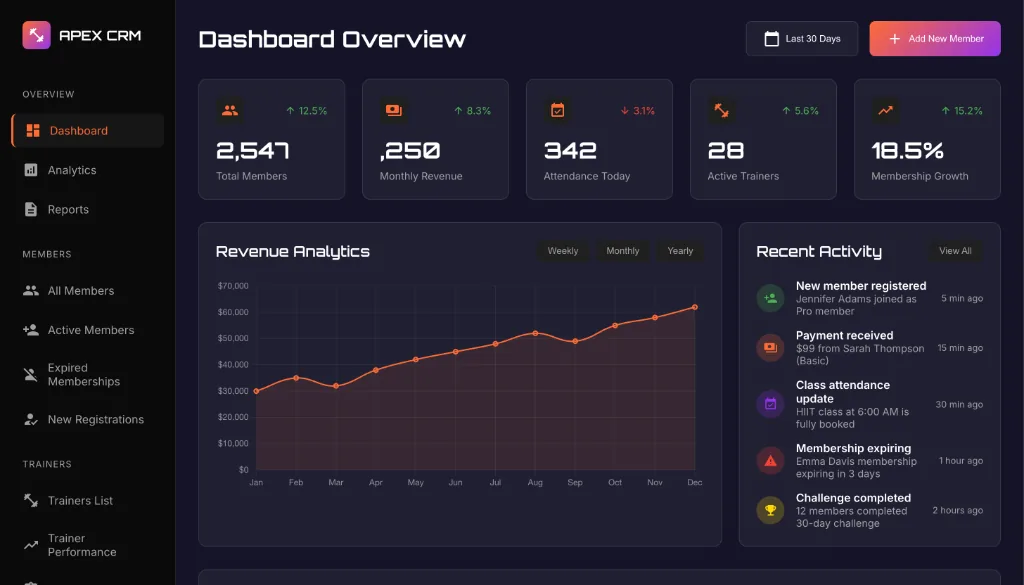
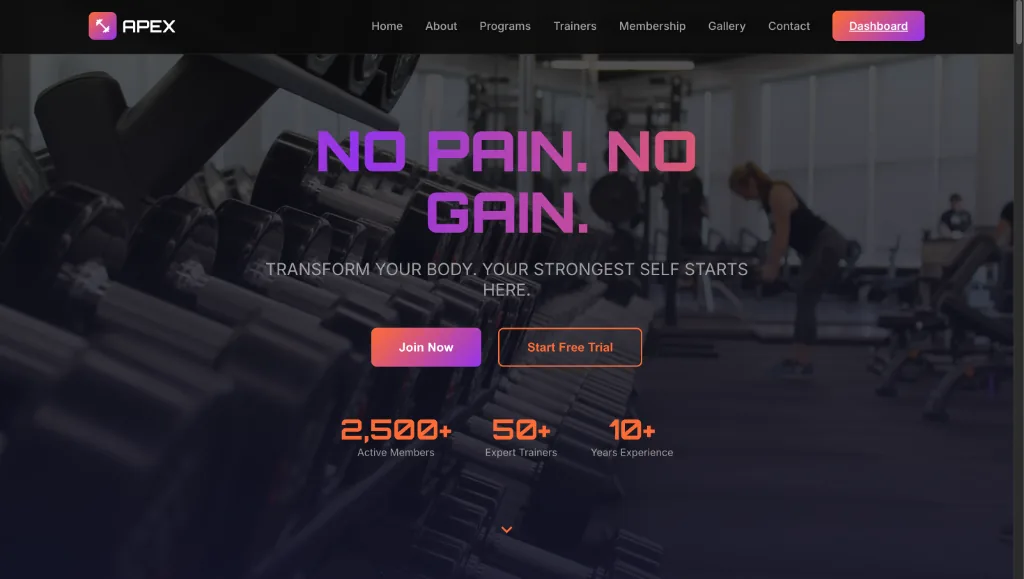
Gym Operations Dashboard

Membership, billing and check-in platform

Challenge
Fitness centres were reconciling payments and attendance by hand in desktop-bound software.
Solution
A cloud admin panel with recurring billing through Stripe and real-time check-in sync.
Outcome
Memberships, recurring billing and check-ins in one cloud dashboard usable from a tablet on the gym floor.
Technology
  • Next.js
  • React
  • Supabase
  • PostgreSQL
  • Stripe
  • Tailwind CSS
Read the case study

Education · Web + Mobile

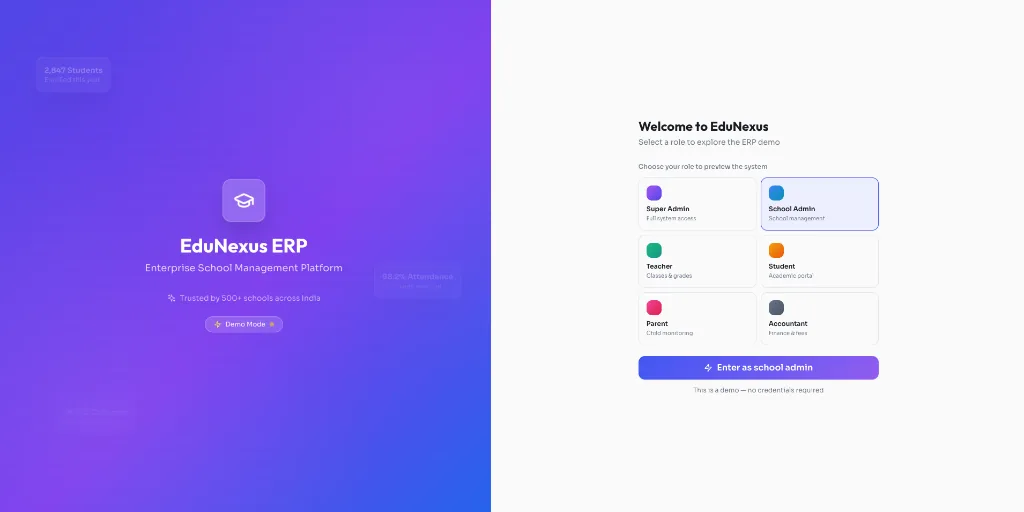
EduNexus

School ERP with web and mobile apps

Challenge
Schools were running admissions, attendance, fees and communication on separate systems that did not share data.
Solution
A multi-campus school ERP with role-based dashboards and mobile apps for parents, teachers and administrators.
Outcome
Admissions, academics, fees, transport and parent communication in one platform with dedicated mobile apps.
Technology
  • React
  • React Native
  • Java
  • Spring Boot
  • PostgreSQL
  • Twilio
Read the case study

FAQs

Common questions.

Which tenancy model should we choose?

Most B2B products start with a shared database and row-level isolation. Regulated customers or very large tenants may need separate schemas or databases. We recommend a model during architecture and document why.

Which payment providers do you integrate?

Stripe for international billing and Razorpay for India are the most common. We choose based on your markets and currencies.

Can you help define the product, not just build it?

Yes. Discovery includes user interviews, scope definition and a release plan.

Do you stay on after launch?

Many clients keep us as their product engineering team. Others take over in-house with our handover documentation.

How long does SaaS MVP development take?

A focused SaaS MVP usually takes a few months, depending on the core workflow, integrations and billing model. We cut scope to what a paying customer needs and plan the rest in later releases.

How do you price SaaS development?

We estimate the first release from a written scope after discovery. Many SaaS clients then continue with a dedicated engineering team on a monthly basis.

Can you integrate Razorpay and Stripe for subscriptions?

Yes. Razorpay suits Indian customers and INR billing; Stripe suits international billing. Some products use both, routed by customer location.

How do you control features by plan?

With a central entitlements layer: each plan defines limits and features, and the application checks entitlements rather than plan names, so pricing can change without code changes.

Planning a project
like this?

Tell us what the system needs to do. We'll reply within 24 hours with questions, not a sales script.