Skip to content

New guideModernizing a legacy system without stopping the business

01 — Custom Software Development

Custom software built around how your business actually runs.

Off-the-shelf tools cover the average business. Most businesses are not average in the places that matter: pricing rules, approval chains, the way stock moves, the way customers are served. We build software for those places — systems your team uses every day that encode how you work and remove the manual steps between tools.

Capabilities

What this service covers.

  1. 01

    Workflow-first discovery

    We map the process as it runs today, with the people who run it, before choosing screens or technology.

  2. 02

    Domain modelling

    A data model that reflects your business entities and their states, so reports and integrations stay consistent.

  3. 03

    Full-stack engineering

    Web front ends, APIs, background jobs and databases built and owned by one team.

  4. 04

    Integration

    Connections to accounting, payment, messaging and existing internal systems through APIs or scheduled sync.

  5. 05

    Role-based access

    Permissions designed with the process, so each role sees and changes only what it should.

  6. 06

    Long-term support

    Monitoring, fixes and an improvement backlog after launch, under a clear support agreement.

What We Build

Custom Software solutions we deliver.

Systems shaped to your operations, not the other way round.

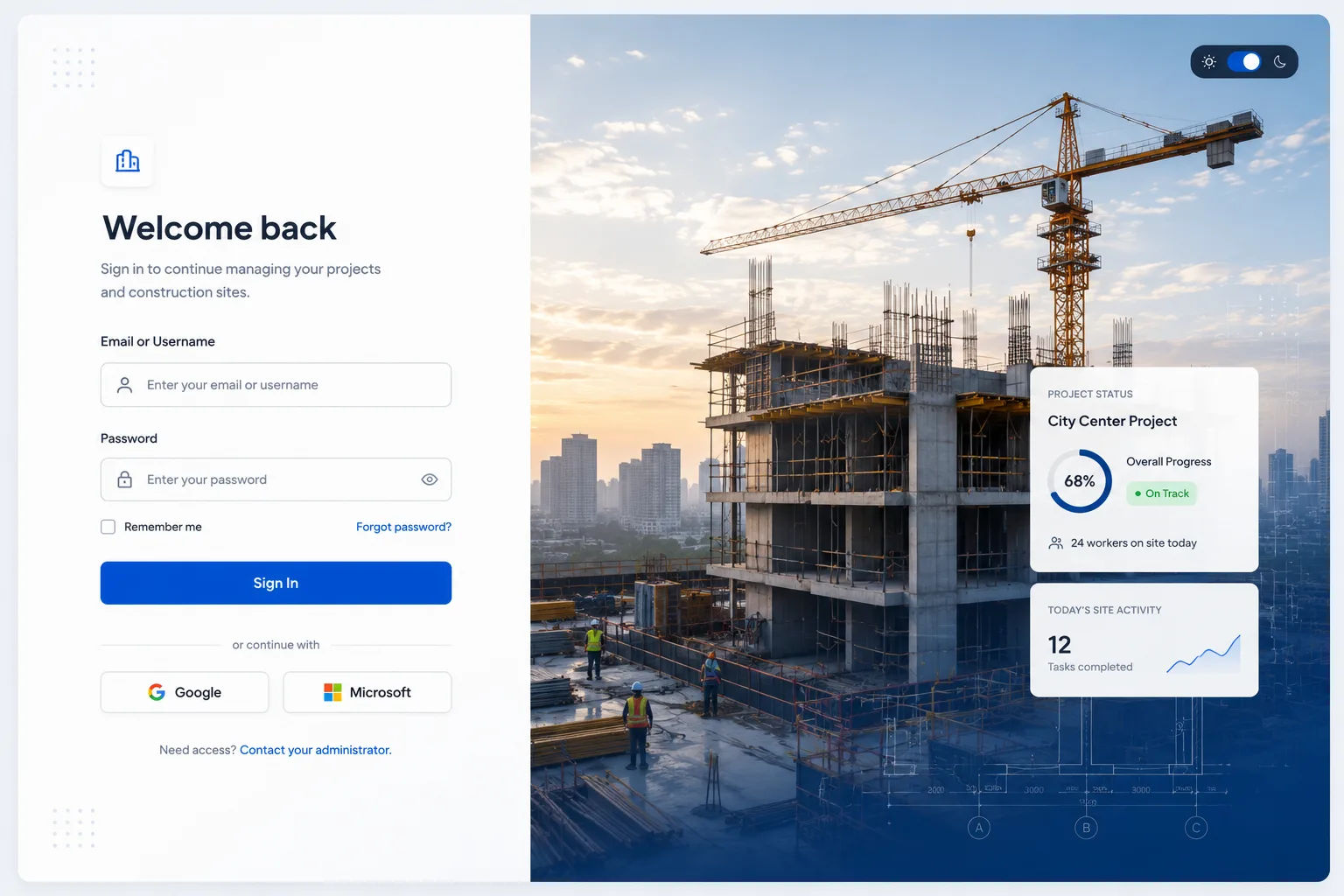
Example Custom Software interface built by Eryon
  • 01

    Operations platforms

    One system for the work that runs across teams — orders, jobs, approvals and handovers.

  • 02

    Customer and partner portals

    Self-service access to orders, documents, tickets and account data.

  • 03

    Quotation and pricing engines

    Rule-based pricing, discounts and quote documents generated from live data.

  • 04

    Scheduling and resource planning

    Shifts, rooms, vehicles or crews planned with conflicts caught before they happen.

  • 05

    Approval and document workflows

    Multi-step approvals with audit history, reminders and escalation.

  • 06

    Field and site applications

    Mobile-friendly tools for attendance, inspections and job updates at the site.

  • 07

    Back-office administration

    Admin consoles for data, users, settings and reports behind your products.

  • 08

    Legacy replacement modules

    New components that take over from ageing desktop or spreadsheet tools one area at a time.

Use Cases

When clients bring us in.

Replacing a spreadsheet chain

When critical data lives in files passed between people, a single system removes re-entry and version conflicts.

Process that no product fits

Pricing, compliance or fulfilment rules specific enough that configuring a generic tool costs more than building.

Connecting disconnected tools

A system of record that sits between existing products and keeps them consistent.

Productising a service

Turning a manual service into a portal customers can use themselves.

Where It's Used

Problems we solve, sector by sector.

  • Manufacturers and distributors

    The problem
    Stock, orders and quotations live in separate spreadsheets.
    What we build
    A single system of record where sales, stores and dispatch share live data.
  • Construction and infrastructure

    The problem
    Site attendance, wages and client billing are reconciled by hand every month.
    What we build
    Role-based project software with attendance, payroll support and automated ledgers.
  • Service businesses

    The problem
    Jobs, technicians and customer updates are coordinated over phone calls.
    What we build
    Job management with scheduling, status tracking and customer notifications.
  • Multi-branch organisations

    The problem
    Each branch runs its own tools and head office sees nothing in real time.
    What we build
    One platform with branch-level control and a consolidated management view.
  • Growing startups

    The problem
    Early tools and no-code workarounds break as volume grows.
    What we build
    A properly engineered core system that replaces the workarounds without disrupting customers.
  • Enterprises with unique processes

    The problem
    Packaged software needs so much customisation that upgrades become risky.
    What we build
    Purpose-built modules for the differentiating process, integrated with the packaged tools you keep.

Recognise your situation here?

Talk to an engineer

How We Deliver

Delivery you can plan around.

Discovery, then sprints

A short discovery phase produces scope, architecture and estimate. Build runs in sprints with a working demo every week.

One accountable team

A lead engineer owns architecture and delivery from the first workshop to production.

Your code, your infrastructure

Source code and cloud accounts belong to you from day one.

Documented handover

Architecture notes, runbooks and environment documentation are part of the deliverable.

Deliverables

  • Process maps and written scope
  • Architecture and data model
  • Production application and source code
  • Automated test suite for critical paths
  • Deployment pipeline and runbooks

Technology Stack

Tools we use for this work.

  • TypeScript
  • React
  • Next.js
  • Node.js
  • Java
  • Spring Boot
  • Python
  • FastAPI
  • PostgreSQL
  • MongoDB
  • Redis
  • Docker

Security & Scalability

  • Designed for growth in data, not just users

    Indexes, archiving and reporting paths planned for years of records.

  • Security in the data model

    Access rules enforced at the API and database, not only in the interface.

  • Observable from day one

    Structured logs, error tracking and health checks ship with the first release.

  • Replaceable parts

    Clear module boundaries so a component can be rewritten without rewriting the system.

Process

From first workshop to production.

  1. 01 · Discover

    Workshops with the people who run the process today. We map how work actually moves, where it stalls and what the system must never get wrong.

  2. 02 · Define

    A written scope: users and roles, core workflows, integrations, non-functional requirements and a release plan you can hold us to.

  3. 03 · Architect

    Data model, service boundaries, hosting, security model and the trade-offs behind each choice — reviewed with your team before code starts.

  4. 04 · Build

    Short sprints with a working demo every week. Code review on every change, automated tests on the paths that carry money or data.

  5. 05 · Validate

    Functional QA, role-by-role acceptance, performance checks and a security pass before anything reaches production users.

  6. 06 · Scale

    Staged rollout, monitoring and a support window. Then the backlog of improvements that only real usage reveals.

Related Case Studies

Where we've done this before.

Manufacturing & Distribution · Web

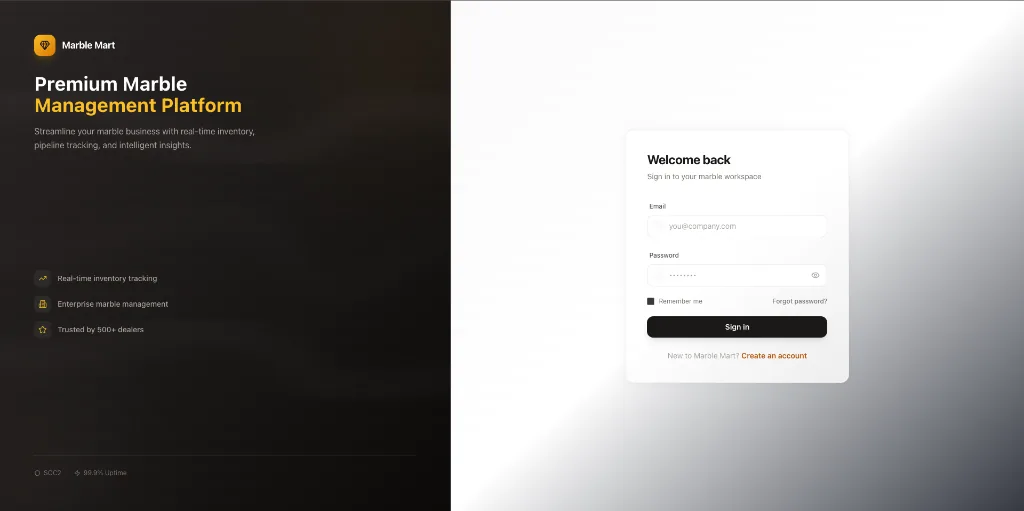
MarbleMart CRM

Sales and inventory CRM for a stone distributor

Challenge
High-value marble inventory across warehouses was tracked in spreadsheets, so sales rarely knew what was actually available.
Solution
A role-based CRM where logistics updates stock and the sales team sees it immediately, with quotations and invoices generated from the same records.
Outcome
One live view of stock, leads and quotations shared by sales, logistics and management.
Technology
  • Next.js
  • TypeScript
  • PostgreSQL
  • Supabase
  • Tailwind CSS
Read the case study

Construction & Infrastructure · Web

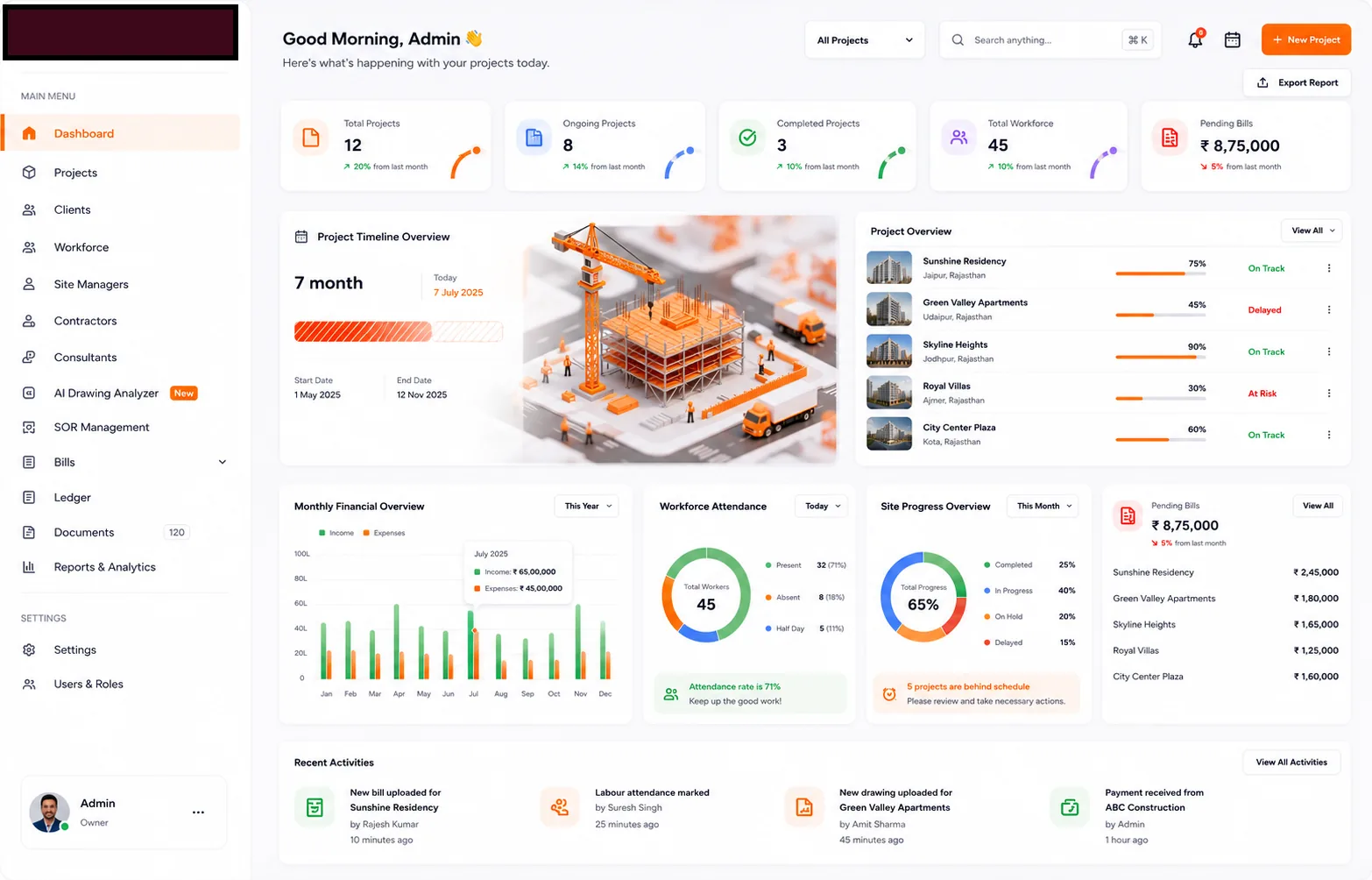
Construction ERP

Project, workforce and billing platform for an infrastructure firm

Challenge
Dozens of concurrent construction projects were run from disconnected spreadsheets for attendance, payroll and billing.
Solution
A role-based ERP for site teams, contractors and clients, with automated wage calculation and client ledgers.
Outcome
Attendance, payroll, materials, documents and client billing across concurrent sites in one role-based system.
Technology
  • Next.js
  • FastAPI
  • PostgreSQL
  • MinIO
  • Redis
  • Docker
Read the case study

Logistics & Delivery · Web

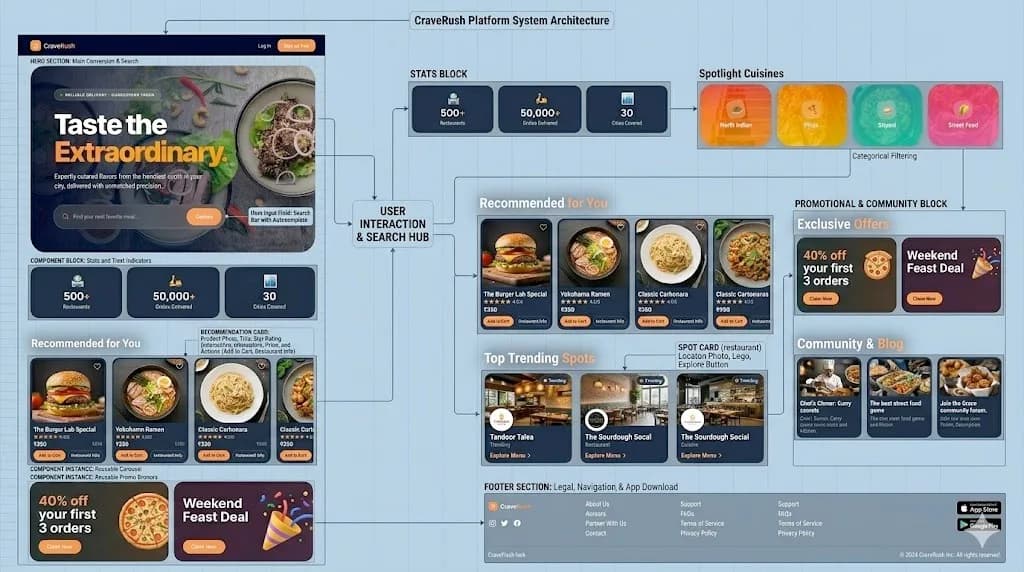
CraveRush

Event-driven food delivery platform

Challenge
A monolithic delivery system would let one overloaded component take down checkout during peak demand.
Solution
Spring Boot microservices communicating through Apache Kafka, with separate data stores for transactions and menus.
Outcome
A delivery platform where a failure in one service does not stop customers from ordering and paying.
Technology
  • Java
  • Spring Boot
  • Apache Kafka
  • React
  • PostgreSQL
  • MongoDB
Read the case study

FAQs

Common questions.

How much does custom software cost?

It depends on the number of roles, workflows and integrations. We start with a short discovery, then give a written estimate for the build based on the agreed scope, so you know the cost before development starts.

How long does a first release take?

A focused first release of an internal system typically takes a few months. We plan releases so your team is using part of the system early rather than waiting for everything.

Who owns the source code?

You do. Code lives in your repository and infrastructure is set up in your cloud accounts.

Can you work with our existing systems?

Yes. Most projects integrate with accounting, payment, messaging or legacy systems. We review what APIs or data access exist during discovery.

What is custom software development?

Custom software development means designing and building software for one organisation's specific workflows, data and users, instead of adapting an off-the-shelf product. You own the code and decide how it evolves.

Why choose a custom software development company in India?

Indian engineering teams combine strong full-stack skills with cost efficiency and overlapping working hours for clients in Asia, the Middle East, Europe and, with planning, North America. Eryon is based in New Delhi and works with clients in India and abroad.

Can custom software integrate with Tally, Zoho or QuickBooks?

Yes, through the product's API or scheduled data exchange. We confirm what each system supports during discovery and design the integration around it.

What happens after the software goes live?

We provide a support period for fixes and monitoring, then an optional ongoing agreement for improvements, updates and infrastructure care.

Planning a project
like this?

Tell us what the system needs to do. We'll reply within 24 hours with questions, not a sales script.